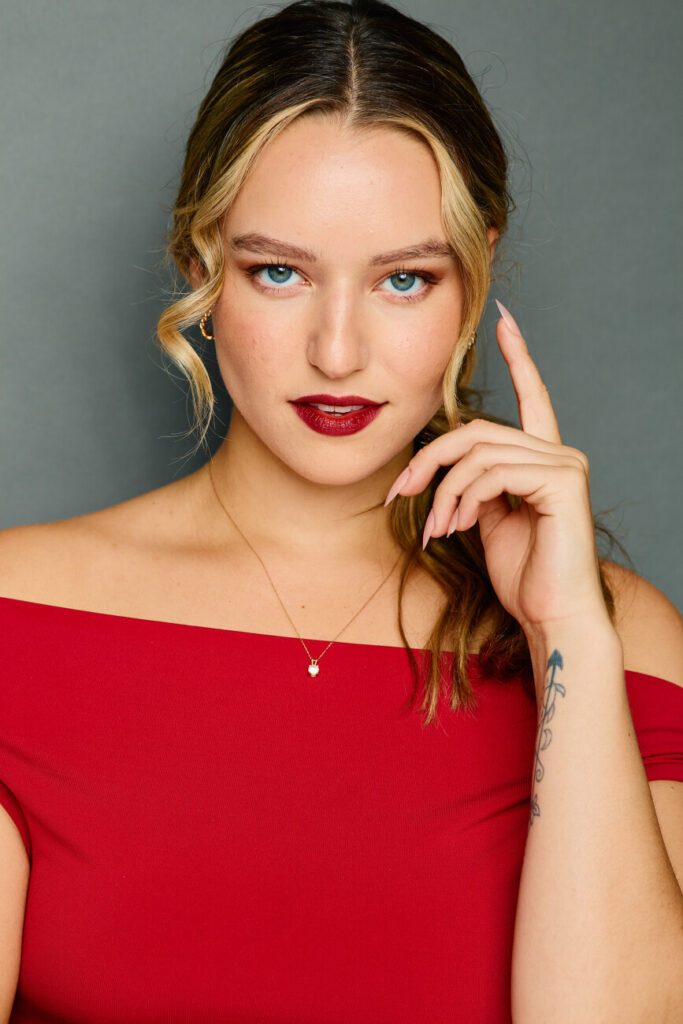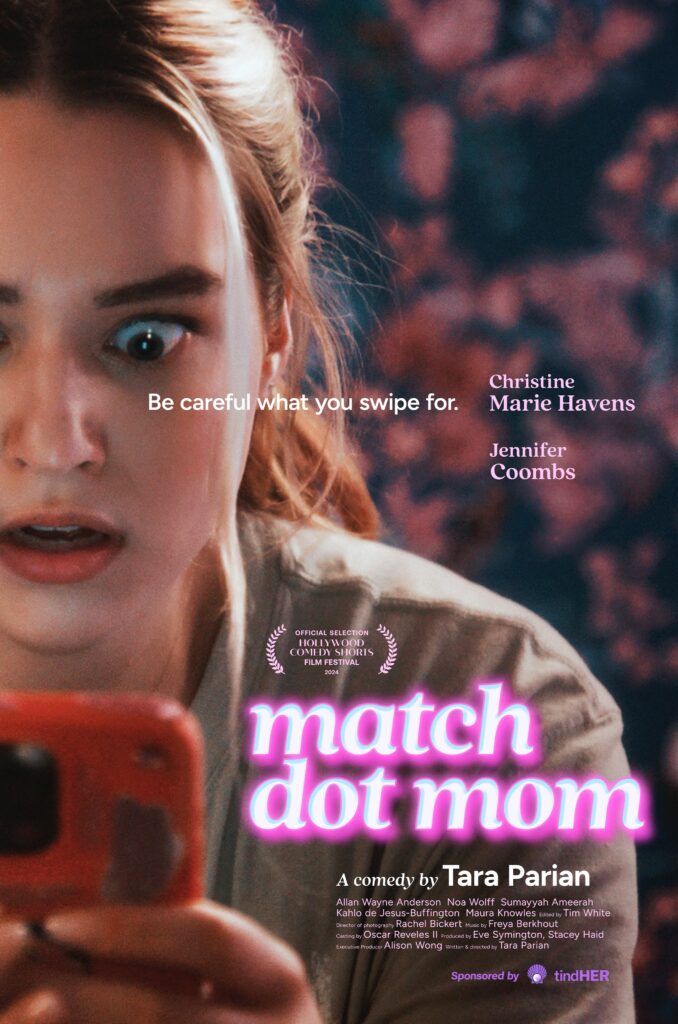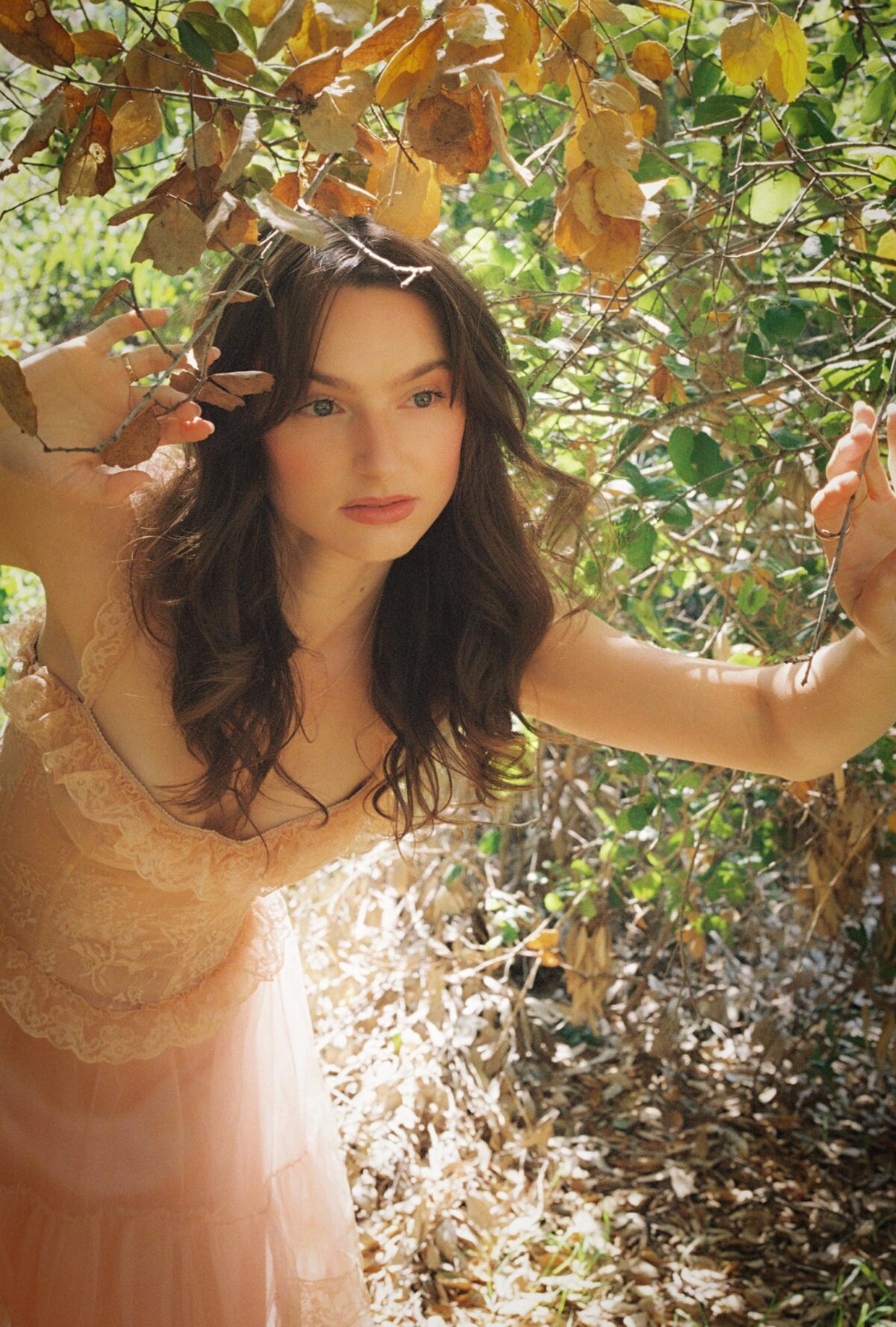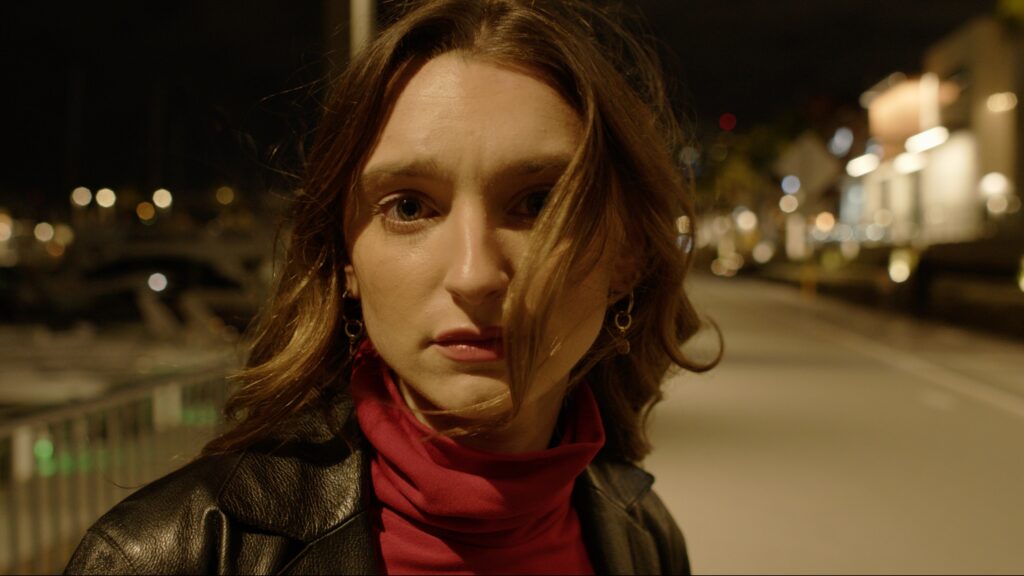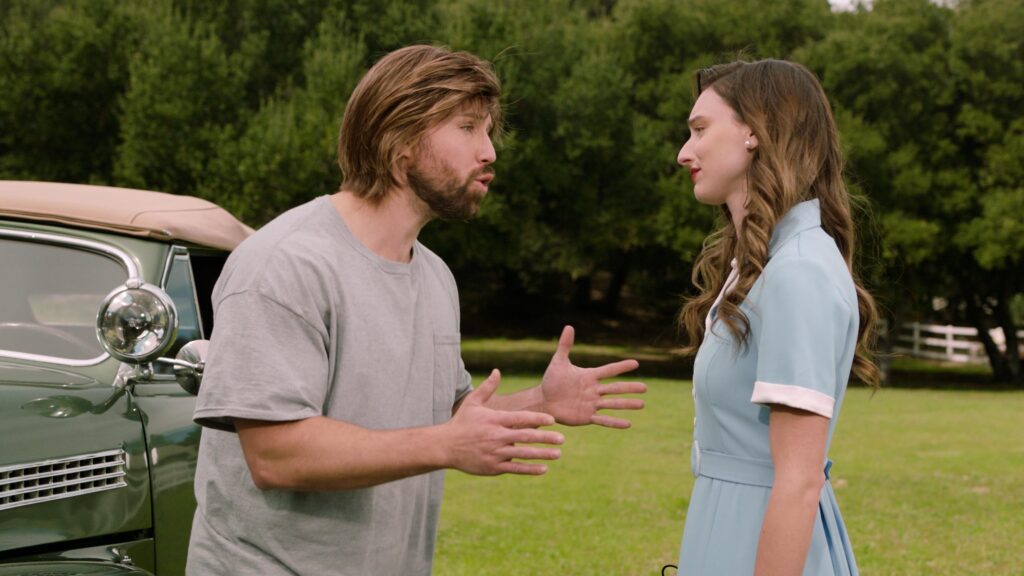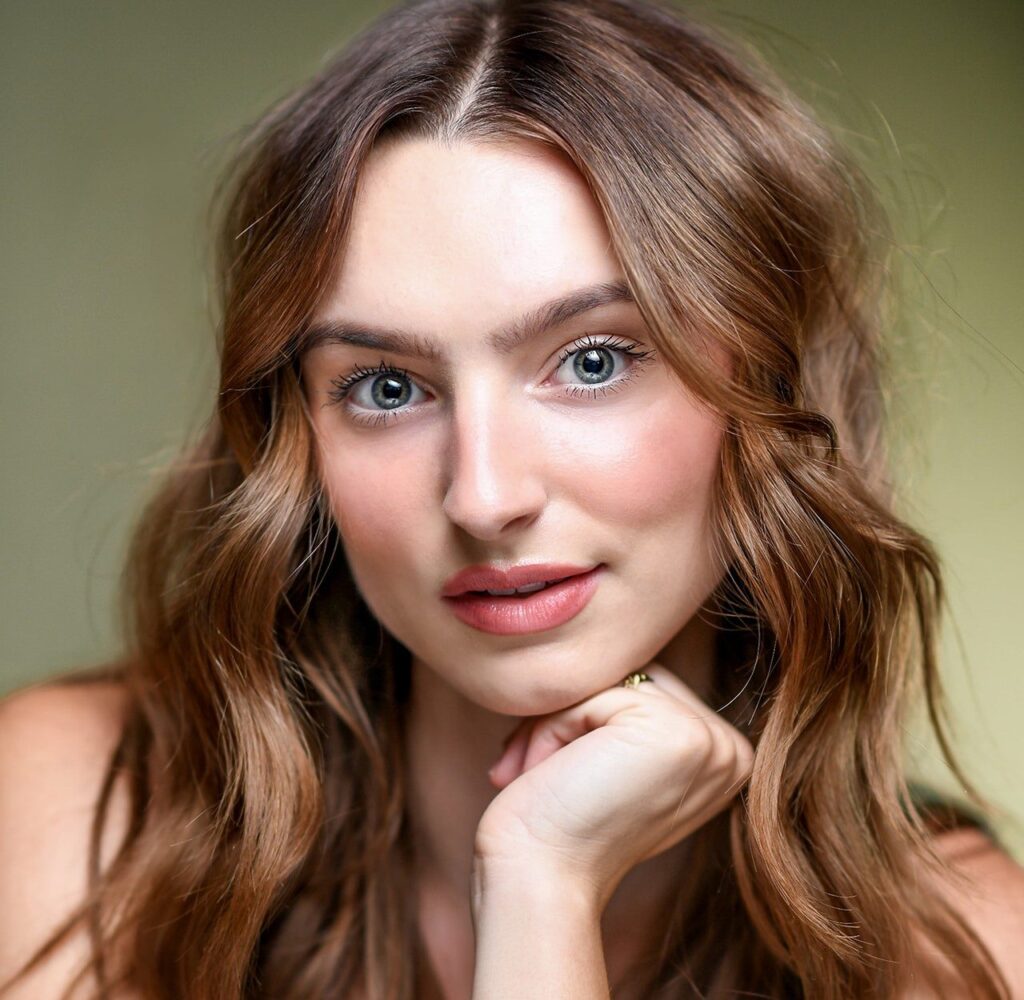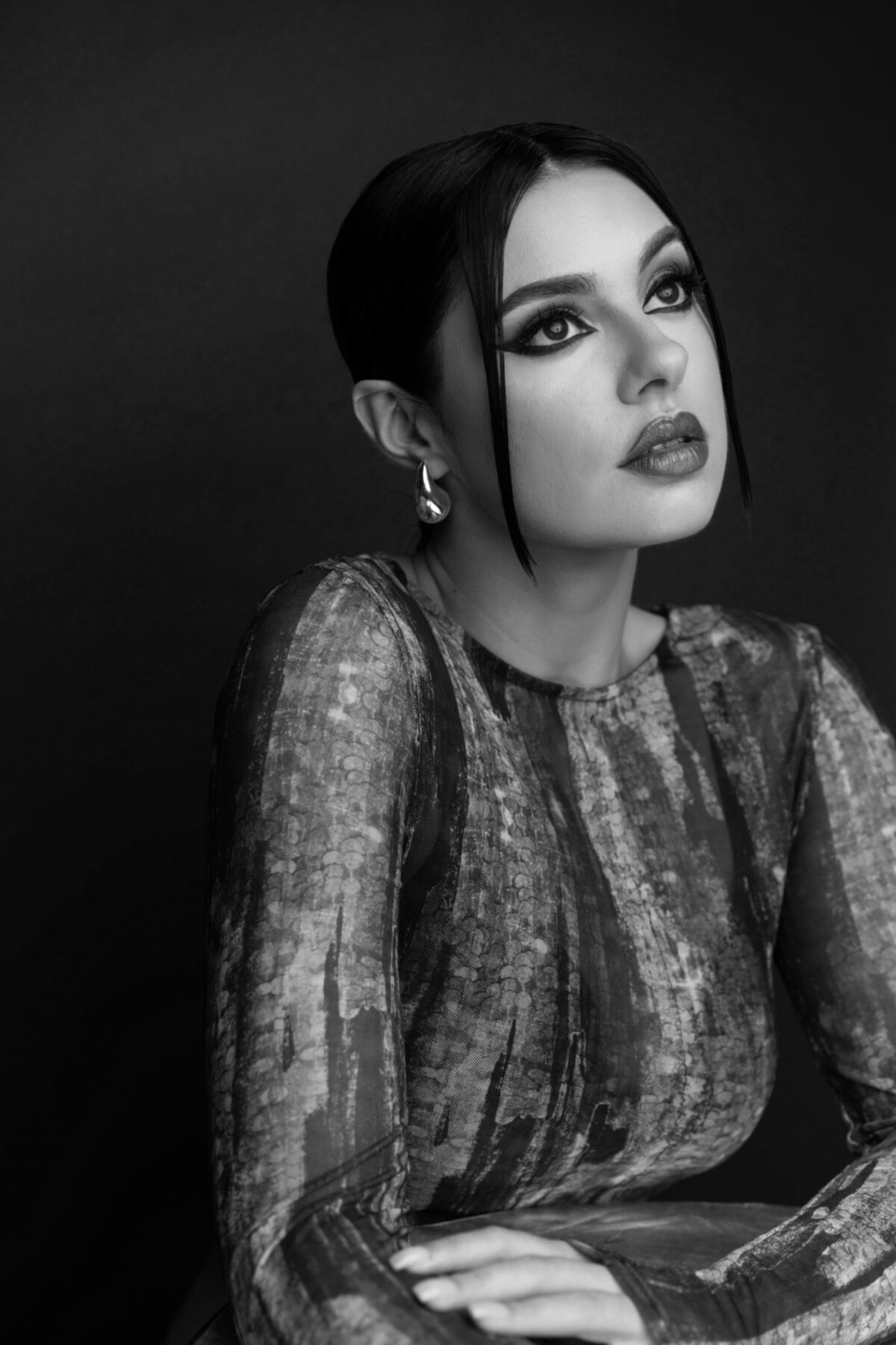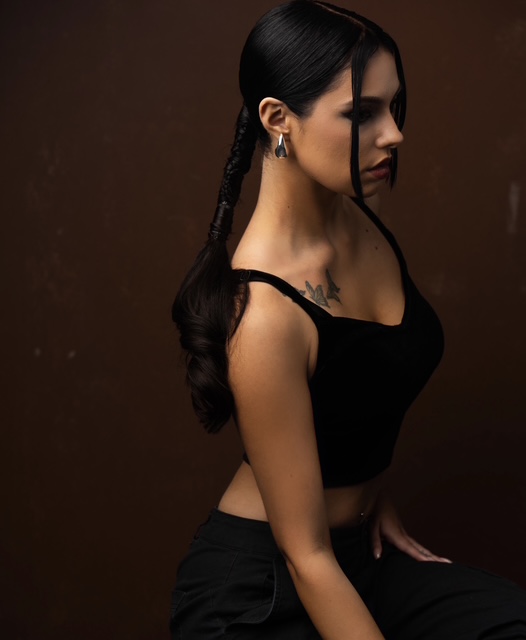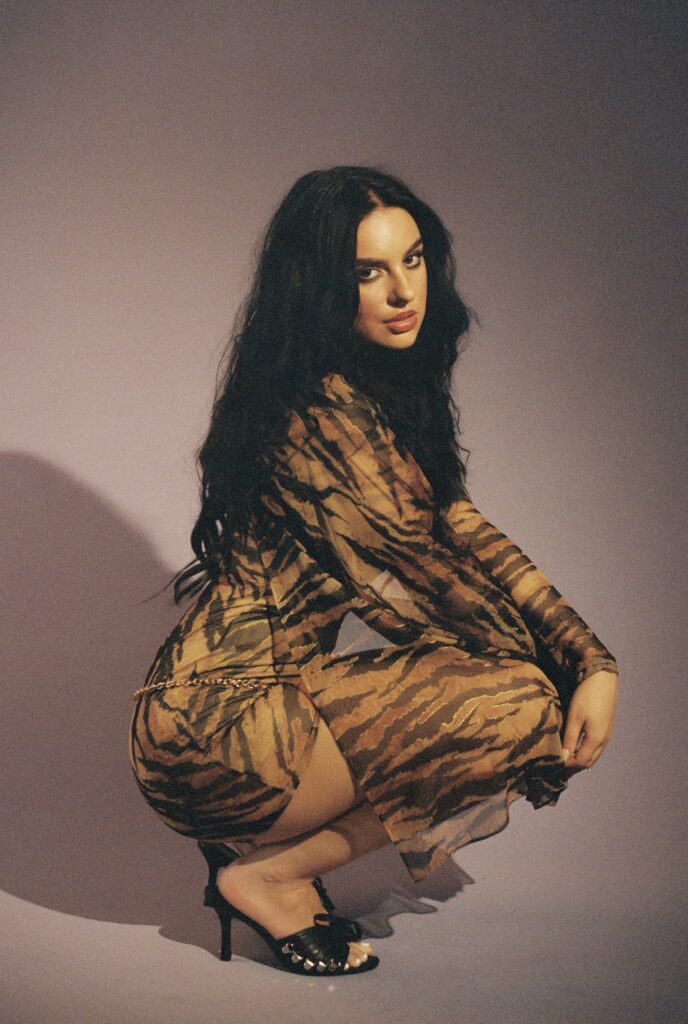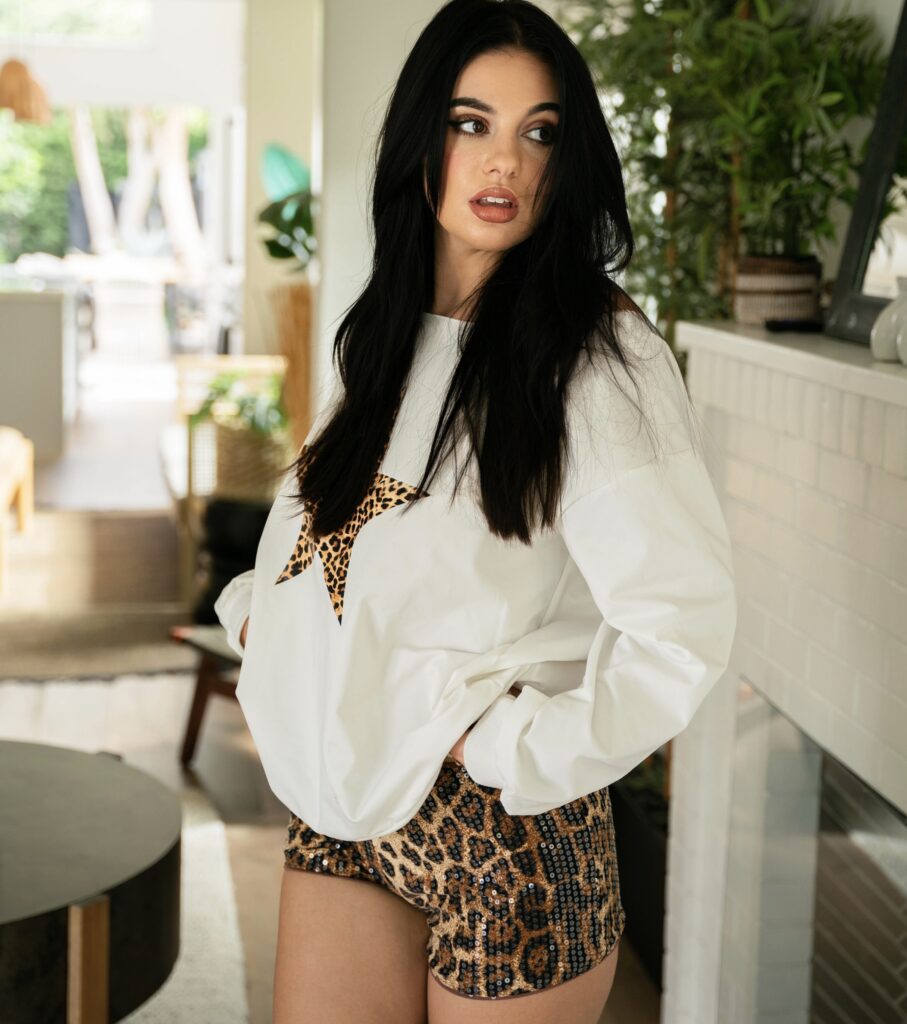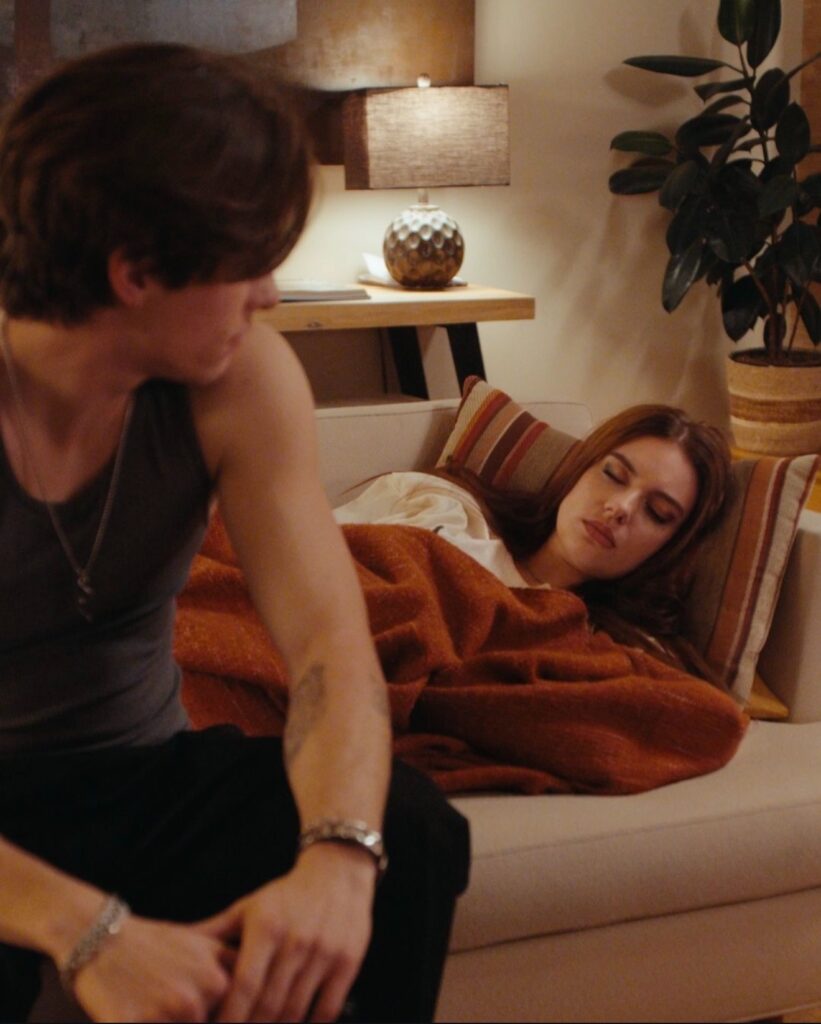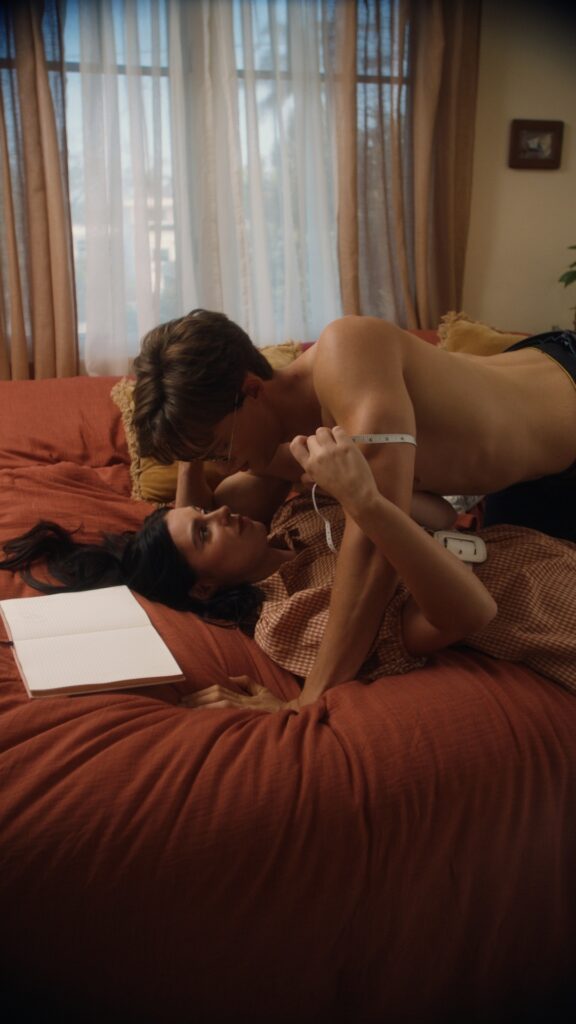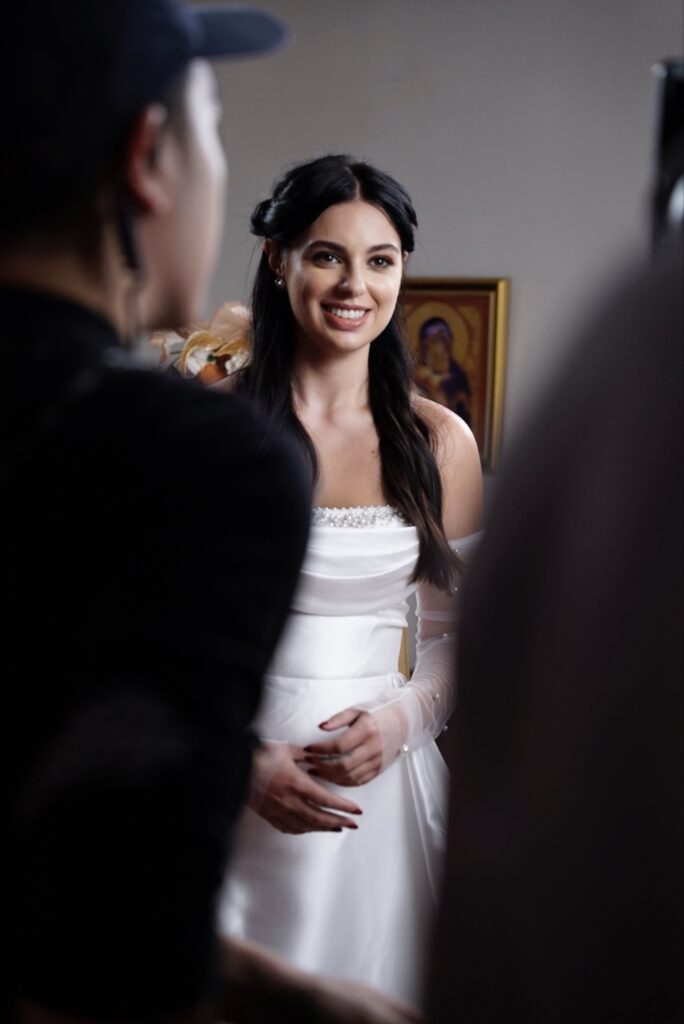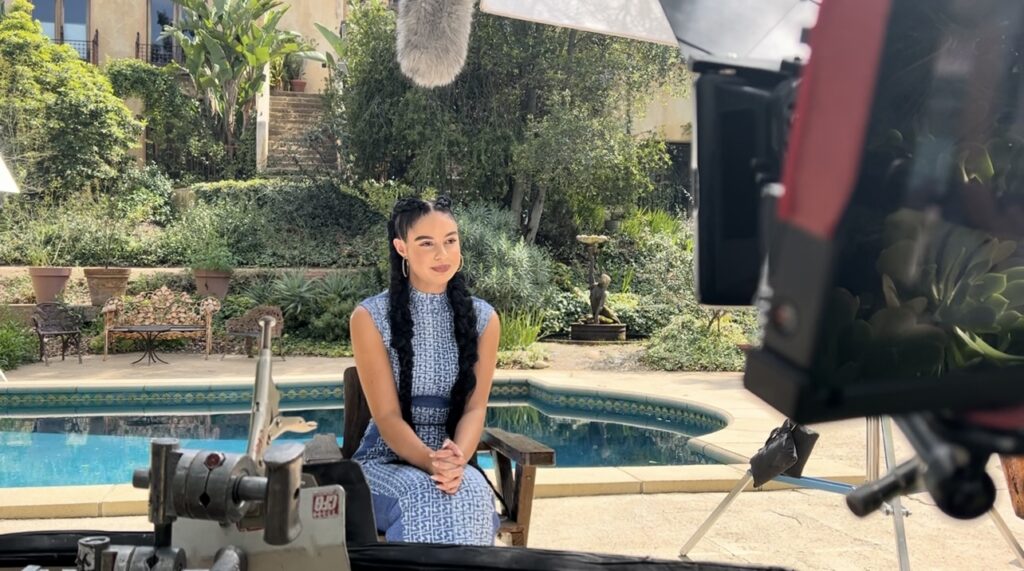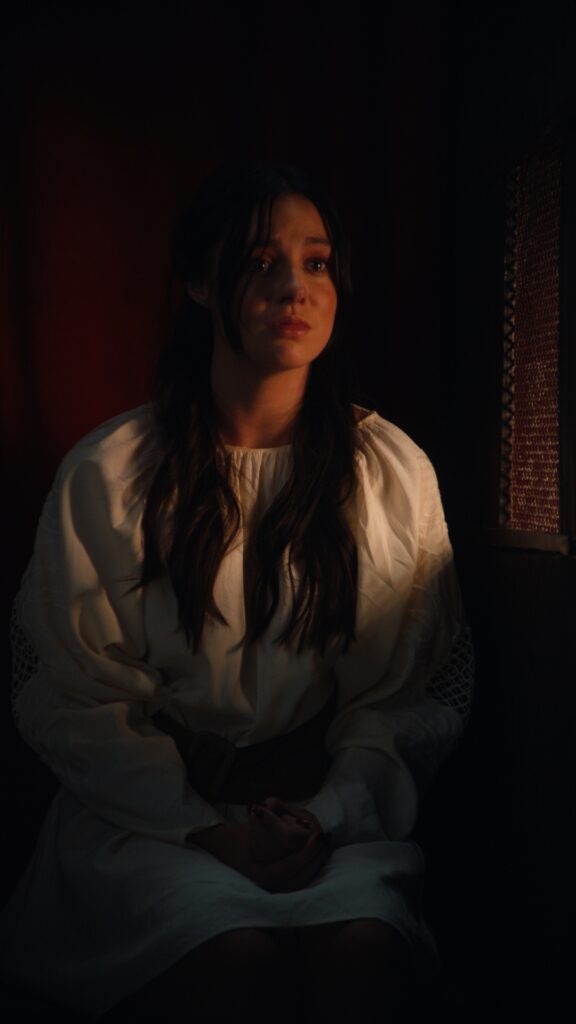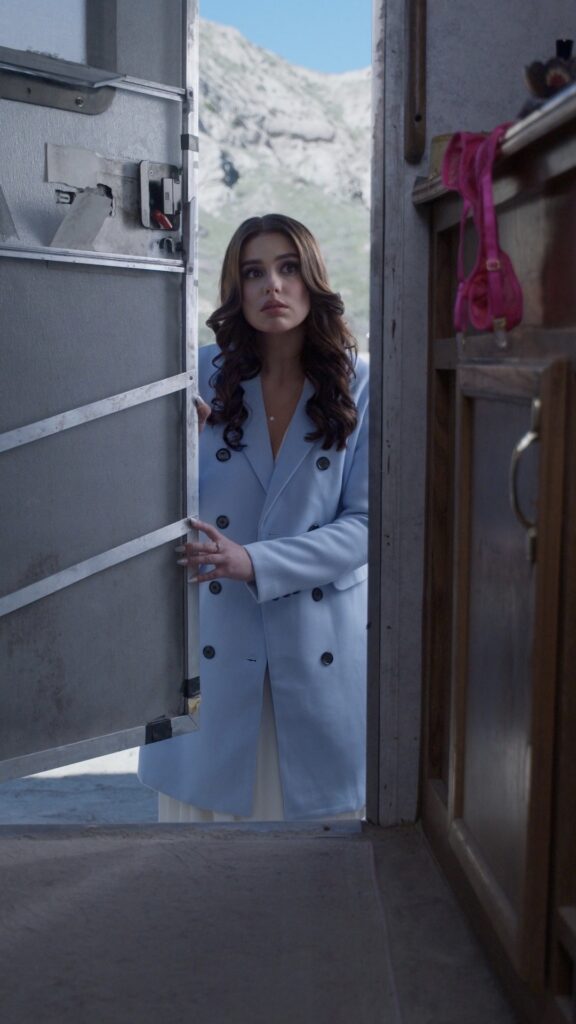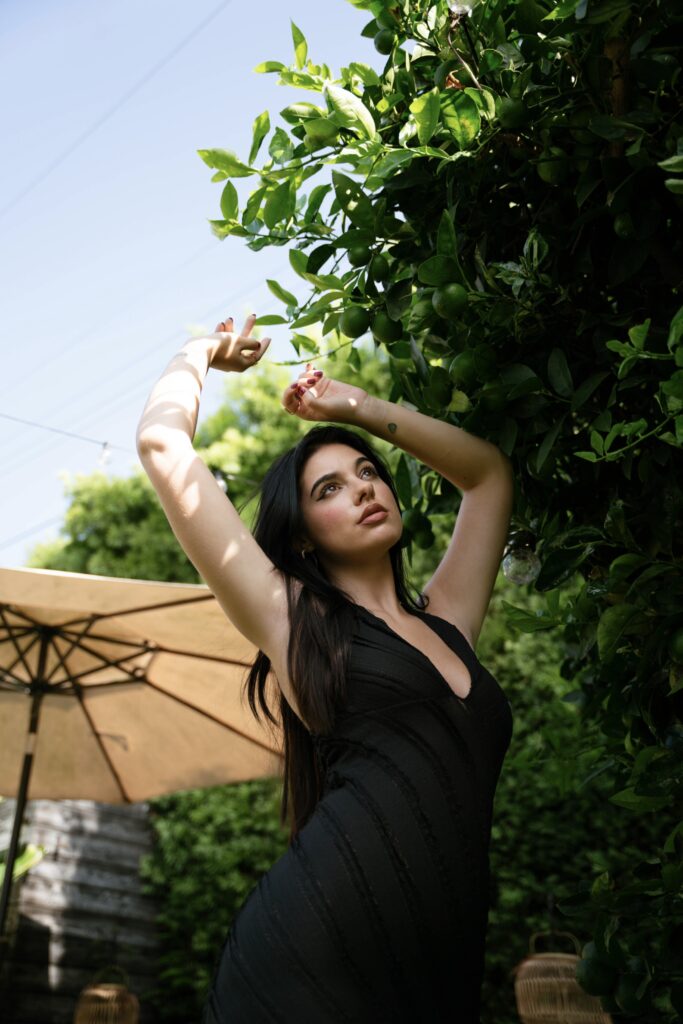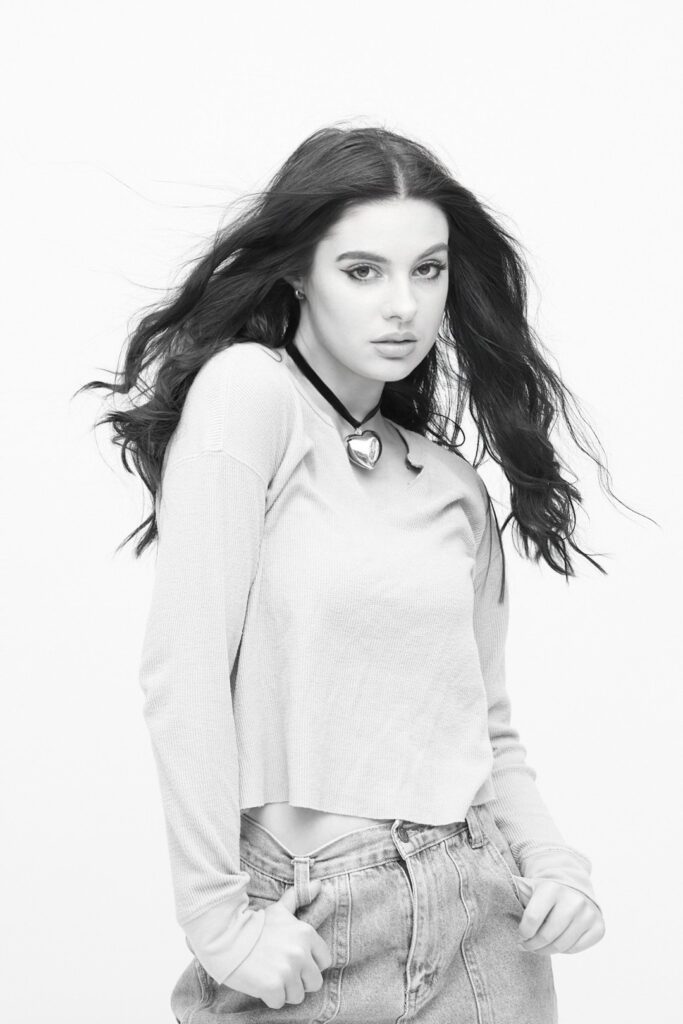
There’s something unmistakably magnetic about Sophia Delucchi – a presence that feels both grounded and luminous, like she’s fully aware of the moment she’s in, yet already reaching toward what’s next.
When we connect, she’s warm, thoughtful, and effortlessly engaging – the kind of person who makes conversation feel less like an interview and more like catching up with someone you’ve known for years. But beneath that ease is a performer deeply committed to her craft, one who doesn’t just step into characters – she dissolves into them.
In the ever-evolving world of vertical storytelling, Sophia is not only finding her footing—she’s helping define what’s possible.
From Stage to the Screen
Long before vertical dramas, Sophia’s foundation was rooted in performance – specifically, musical theater.
Raised in Northern California’s East Bay, she eventually made her way to Los Angeles to study at AMDA College of the Performing Arts, splitting time between LA and New York. Like many performers, her original trajectory pointed toward Broadway.
But timing had other plans.
“I always thought I would end up in New York doing Broadway,” she says. “And then the pandemic happened.”
What could have been a derailment became a pivot.
“It gave me time to slow down – time I never would have allowed myself otherwise. And that’s when I started exploring TV and film.”
That exploration would eventually lead her into the vertical space – an industry still defining itself, but one she’s already helping shape.
The Vertical Evolution: From Formula to Freedom
Sophia entered vertical storytelling at a time when the format was still heavily templated – predictable tropes, repeated character archetypes, and limited creative deviation.
“It was very cookie-cutter for a while,” she explains. “CEO billionaires, single moms, very similar storylines.”
But now?
“It’s such a treat when something pushes the envelope.”
And that shift isn’t accidental.
Sophia is quick to point out that vertical storytelling is uniquely responsive to its audience.
“This space is different because the audience has a voice. They’re asking for stronger female arcs, different stories – and we’re starting to see that.”
That responsiveness is fueling a creative evolution – one she’s genuinely excited about.
I’ve had scripts come through recently that really impressed me. I’m hopeful. I think we’re heading in a really good direction.
“Once I step into character, Sophia is gone.”
Chemistry, Connection, and the Art of Becoming Someone Else
If there’s one thing Sophia clearly thrives on, it’s connection.
Not just with audiences – but with her scene partners, often under intense, accelerated conditions.
“You meet someone 20 minutes ago in hair and makeup,” she says, laughing. “And your first scene is professing your love.”
It’s a dynamic that would rattle most people – but for Sophia, it’s where the magic happens.
“I love creating chemistry. I really love it.”
That ability stems from her training – but also from something more instinctive.
“Once I step into the character, Sophia is gone.”
And in that disappearance, something powerful emerges.
“It’s like being an escape artist. You step into another world – and for that moment, it’s completely real.”
The Emotional Cost of High-Speed Storytelling
Vertical productions move fast. Extremely fast.
Scenes jump from heartbreak to romance to chaos – sometimes within the same hour.
“One minute you’re filming a kidnapping, the next you’re on a romantic date, and then your dad dies,” she says. “It’s a lot.”
And while the stories are fictional, the emotional toll is very real.
“Your nervous system doesn’t know it’s fake,” she explains. “You go home exhausted, and you have to remind yourself – ‘That wasn’t real. You’re okay.’”
It’s a level of emotional immersion that requires both discipline and recovery – especially when projects stack back-to-back.
“I did four in a row once. No breaks,” she says. “And I hit burnout. It’s something we have to be really mindful of.”
“It’s like being an escape artist – you step into another world, and it’s completely real.”
Building a Character: Music, Memory, and Mannerisms
Sophia’s process is as intentional as it is intuitive.
Every character begins the same way:
A visual collage
A curated playlist
“I build a full playlist for every character,” she says. “It’s my lifeline.”
Music becomes the emotional anchor – helping her transition instantly between scenes, tones, and states of mind.
“It helps me lock into the moment.”
She also draws inspiration from real life – subtle behaviors, gestures, and habits.
“We used to study people in school,” she explains. “And now I pull those mannerisms into characters.”
It’s how authenticity is built – not through imitation, but observation.
“The audience has a voice in this space – and they’re asking for better stories.”
Improvisation, Freedom, and Finding Joy on Set
While many actors rely heavily on structure, Sophia thrives in spontaneity.
“I love improvising,” she says. “That’s when you’re really living as the character.”
Some of her most memorable moments weren’t scripted at all.
“There are lines people respond to – and I’m like… that was just me.”
That creative freedom was especially present in one of her more comedic projects:
“My Boss Thinks I’m a Boy,” a wildly different tone from her more dramatic work.
“I put that wig on and just lived,” she laughs. “It was so much fun.”
“AI can’t live and breathe in a character. That’s what makes this work human.”
The Reality of AI – and Protecting What’s Human
As vertical content grows, so does concern around AI-generated performances.
Sophia doesn’t shy away from the conversation.
“It’s tricky,” she says. “We’re all trying to figure out how to protect ourselves and our likeness.”
What concerns her most isn’t just the technology – but what it replaces.
“What I love about this space is the community,” she explains. “The connection between creators and audiences.”
And that’s something AI simply can’t replicate.
“It can’t live and breathe in a character.”
Who She Wants to Work With Next
When asked who’s on her dream collaboration list, Sophia lights up.
“I’d love to work with more of the girls,” she says. “We need more female-driven stories.”
But on the opposite side?
“I’m waiting for the day I get to work with Noah Fearnley – I’d love a rom-com with him. And I’d love a drama with Eric Guilmette.”
It’s not just about working – it’s about creating something meaningful.
“Our paths will cross. I know they will.”
Why It All Matters
At its core, Sophia understands something fundamental about storytelling:
People don’t just watch content – they feel it.
“I want to create something people can turn to – on a good day or a bad day – that makes them feel something.”
And in a world that’s increasingly fast, fragmented, and artificial – that kind of connection matters more than ever.
Final Thoughts
Sophia Delucchi isn’t just part of the vertical wave – she’s part of its evolution.
She brings discipline from the stage, adaptability from the screen, and a deeply human approach to every role she takes on.
Whether she’s navigating high-stakes drama, embracing comedic chaos, or building characters through music and memory – one thing is clear:
The Rise of Vertical Dramas and Autumn Noel’s Unique Place in It
In the ever-evolving landscape of digital entertainment, where short-form content reigns supreme and attention spans are fleeting, vertical dramas have emerged as a captivating niche. These bite-sized series, often consumed on mobile devices in vertical format, blend high-stakes storytelling with addictive tropes, think forbidden romances, werewolf alphas, and emotional rollercoasters. Yet, amid the formulaic elements that dominate the space, talents like Autumn Noel stand out, bringing depth, subtlety, and a grounded authenticity to their roles. At just 25, Noel has already carved a niche for herself in platforms like ReelShort, captivating audiences with performances that resonate beyond the screen.
I had the pleasure of chatting with Autumn virtually one crisp morning, she from her base in Los Angeles, me from my home in Woodstock, Georgia. As someone who’s spent over two decades in the entertainment industry (acting, managing, writing – you name it), I’ve interviewed my share of rising stars. But Autumn’s energy was refreshingly genuine: a mix of youthful enthusiasm, thoughtful introspection, and a storytelling passion that transcends trends.
We dove into her latest projects, her creative process, and her ambitions, all while bonding over shared experiences of bullying, heartbreak, and the healing power of art. What unfolded was not just an interview but a free-flowing conversation that revealed the multifaceted artist behind the vertical-drama darling.
From Near-Quitter to Vertical Breakthrough
Autumn’s journey into acting wasn’t a straight path. She moved to L.A. at 19, fresh-faced and determined, but like many in the industry, she faced the grind of auditions and rejections. “I almost quit acting in 2023,” she confessed, recalling the Hollywood strikes that halted productions and left actors scrambling. “Nothing was happening.” Then came her breakthrough in vertical dramas – a lifeline that kept her working when traditional film and TV gigs were scarce. Her debut in Fated to My Forbidden Alpha marked the start, but it was The Words, a ReelShort adaptation of a popular book, that truly showcased her range.
Shining in The Words: Chemistry, Challenges, and Fan Reactions
In The Words, Autumn plays Lennon, a character navigating bullying, self-doubt, and a passionate romance with Phoenix, portrayed by Ben Armstrong. The series, which incorporates music and themes of family abuse, has garnered nearly 50 million views, a testament to its appeal. “I had so much fun,” Autumn said, her voice lighting up. “I had so much fun on that project. Ben is so great to work with, one of the more passionate actors I’ve collaborated with. We fed off each other.”
That sense of reciprocity, of energy moving between performers rather than being manufactured, is something she values deeply. Chemistry, she believes, can’t be forced. It has to be earned in the moment. Yet not everyone was on board at first. “We got some backlash because we were different from what fans imagined from the book,” she explained. Still, “most people loved it,” I say.
Ben Armstrong and Autumn Noel in The Words (2026)
The book’s spiciness, think Fifty Shades of Grey on steroids, was toned down for the screen, a decision Autumn appreciated. “It was more than Fifty Shades,” I noted, having read it post-viewing. Autumn laughed, agreeing: “We tamed it down.” What sets The Words apart, she believes, is its deviation from the genre’s over-relied tropes. “It had elements of abuse and bullying, but I want to steer away from that,” she said firmly.
Bullying hits close to home for both of us. Autumn shared that she was bullied in school, leading her to drop out and switch to online learning. “Kids are mean,” she reflected. “Reliving that in adult roles messes with my mind sometimes.” I echoed her sentiment, recounting my own middle school horrors that left lasting scars. “It takes you back,” I said. Yet, in The Words, Autumn channeled that pain into a performance that’s emotive and layered, far from the heightened theatrics some verticals demand.
Autumn has brought that same joy and energy to other projects as well. She particularly loved working on the holiday drama Baby Please! Don’t Come Home for Christmas. “I loved working on this one,” she shared warmly. “Connor [Tuohy] was exceptional, and we had so much fun filming in Lithuania.”
Check out a clip from Baby Please! Don’t Come Home for Christmas (2025):
Grounded Acting: Overcoming Criticism and Building a Fanbase
Autumn’s acting style is rooted in subtlety, shaped by her film and TV training rather than theater. “My acting is more grounded,” she explained. Early feedback was tough, with some viewers wanting a more heightened, theatrical energy than what she naturally brought to her roles. “It got in my head,” she admitted. “I thought I had to show more emotion or everyone would think I couldn’t act.” But she emphasizes that the critique was more about perception than reality. Today, Autumn’s fans rave about her in online groups: “She’s my number one,” they say. “I’ll watch anything she’s in.” It’s validation she’s earned, especially as she’s expanded her repertoire.
Musical Talents and Creative Releases
Beyond verticals, Autumn’s passions run deep. Music is a cornerstone – she sings, plays piano and guitar, and even incorporates it into The Words. “Music comes naturally; it’s a release,” she shared. During dark times last year, songwriting helped her process emotions that acting couldn’t touch. She dreams of roles that blend her talents: writing songs for projects, perhaps even for musical films like La La Land or Sweeney Todd, two of her favorites. Recently, she wrapped a dance-focused vertical, drawing on her hip-hop background. “I started as a ballerina in it, but they adjusted because I don’t do ballet,” she laughed. “I danced barefoot – more lyrical contemporary.”
Horror Aspirations and Future Directing Dreams
Horror, however, is her ultimate aspiration. “I really want to do horror,” she enthused. Mia Goth tops her list: Pearl, Maxxxine, and the new Frankenstein with Jacob Elordi. “Saw was one of my first – brutal, but the concept of forcing truths in a locked room is genius.” Other favorites include Silent Hill (inspired by the video games she grew up playing), The Craft, and The Strangers.
She also draws deep inspiration from emotionally raw dramas such as Girl, Interrupted, starring Winona Ryder, and The Basketball Diaries with Leonardo DiCaprio. “I love films like that, because the acting is always top tier,” she said, citing their unflinching explorations of mental health and substance abuse. “I want stories with purpose and emotion.” Directing is on the horizon too: gritty, early-2000s vibes like Thirteen, with that raw, coming-of-age edge.
The Evolving Vertical Drama Industry
We delved into the thriving vertical drama landscape, highlighting Hollywood’s increasing investments, such as Taye Diggs’ Candy Jar Films, and the exciting possibilities it holds, tempered by current challenges. “It has tremendous potential to expand if companies embrace creative risks,” Autumn shared. “Currently, we’re often limited to recurring tropes like bullying and abuse.” She’s been selective, passing on projects that mock disabilities or endlessly recycled werewolf/incest themes, but remains enthusiastic about the format. “I’m eager to keep contributing as it evolves toward more diverse and meaningful stories that I’m proud to tell,” she emphasized. Candy Jar stands out to her: “Their productions look fantastic! I’d love to work with them.”
Personal Growth, Therapy, and Guilty Pleasures
Personal growth was a common thread throughout our talk. Therapy has been transformative for Autumn. “It’s ongoing, grieving, healing, being kind to yourself,” she said. We bonded over attracting “fixer-upper” partners, laughing at our shared Sagittarius-Aquarius tendencies. “I’m a fixer,” she admitted. “But they have to want to change.” Her guilty pleasures? Gilmore Girls and Pretty Little Liars are comfort watches from her youth.
Looking Ahead: Optimism and Broader Horizons
As our conversation wrapped up, Autumn’s optimism shone through after we shared laughs and insights. She’s eyeing an upcoming project with Evan Adams, and her fans are buzzing. “You’re phenomenal inside and out,” I told her. She beamed: “That made my day.”
Autumn Noel isn’t just a vertical actress; she’s a storyteller poised for broader canvases: horror thrillers, musical epics, and grounded dramas. In a space often criticized for repetition, she’s pushing for evolution, one authentic performance at a time. Watch for her: The Words are just the beginning. Follow Autumn on social media for updates, and check her out in The Words on ReelShort if you haven’t; it’s a vertical that hints at what’s possible when talent meets innovation. Catch Autumn on Instagram and TikTok.