There is a very specific kind of actor who can walk into a heightened vertical drama, deliver a line that sounds almost impossible on paper, and somehow make the moment work.
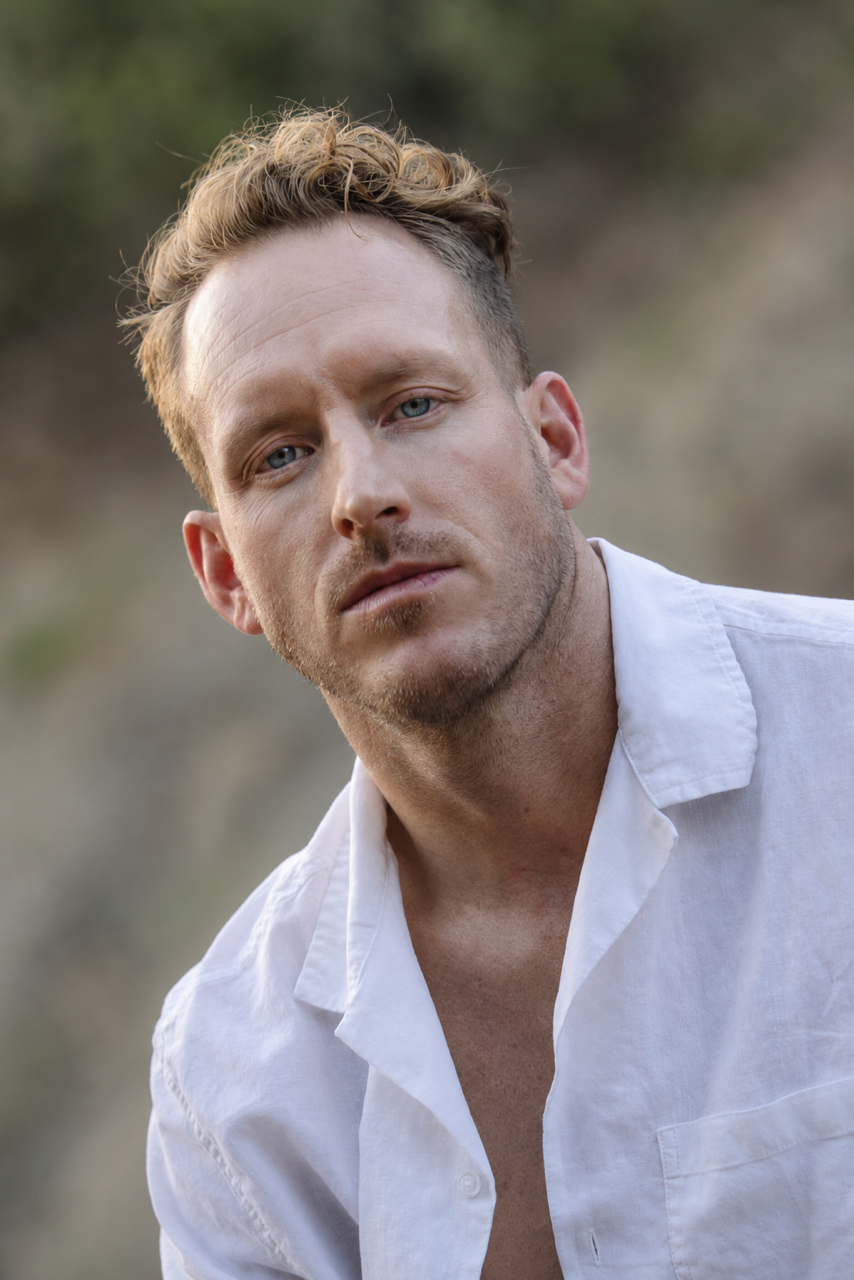
Aaron Oberst is one of those actors.
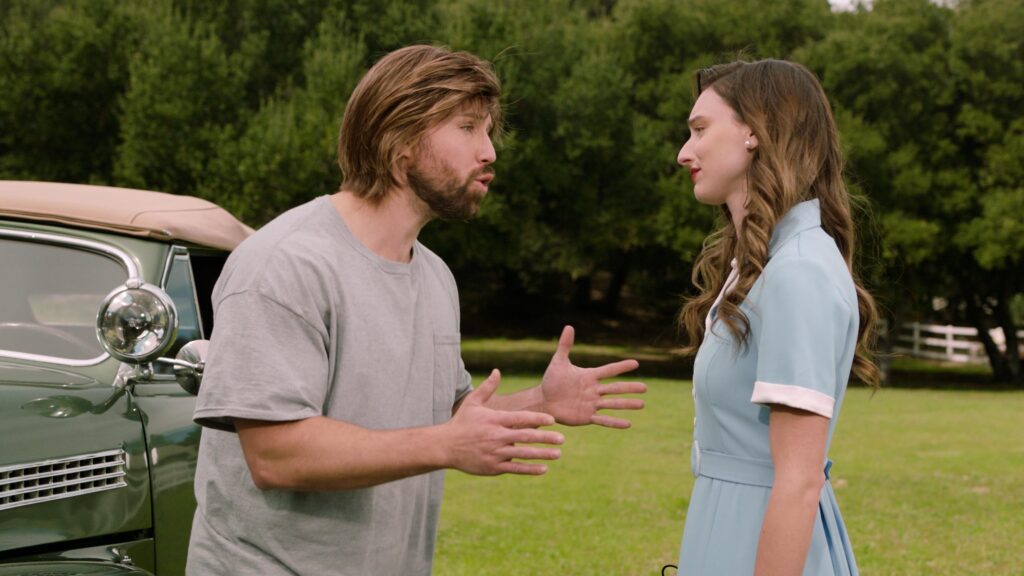
To many fans of the vertical drama space, Oberst has become a familiar face through roles in projects like Daddy December, Surrender to My Professor, and The Maid Did It. He has played the dominant leading man, the complicated romantic figure, the emotionally charged husband, and, as he jokes, more than a few characters who could comfortably be described as “the asshole.”
But the real Aaron Oberst is far removed from the archetype many viewers know him for.
Off-screen, he is thoughtful, funny, spiritually grounded, self-aware, and deeply intentional about where his career is headed next. He is a husband, a father of two young daughters, an actor still pushing himself in the “acting gym,” and a performer beginning to ask harder questions about which doors are worth walking through.
“I’m so thankful for where I’m at and how I’ve been working,” Oberst says. “But as a dude who’s married with kids, it’s kind of just like, this isn’t really the best thing for me to be doing.”
That tension — gratitude for the opportunities, honesty about the cost, and a desire for more substantial work — sits at the heart of Oberst’s current artistic chapter.
In conversation with Talent In Borders, Oberst opened up about his accidental “Daddy” reputation, the changing vertical drama landscape, AI’s impact on actors, his faith, fatherhood, his unexpected path from physics to acting, and why he is ready for roles that are darker, deeper, stranger, funnier, and more emotionally substantial.
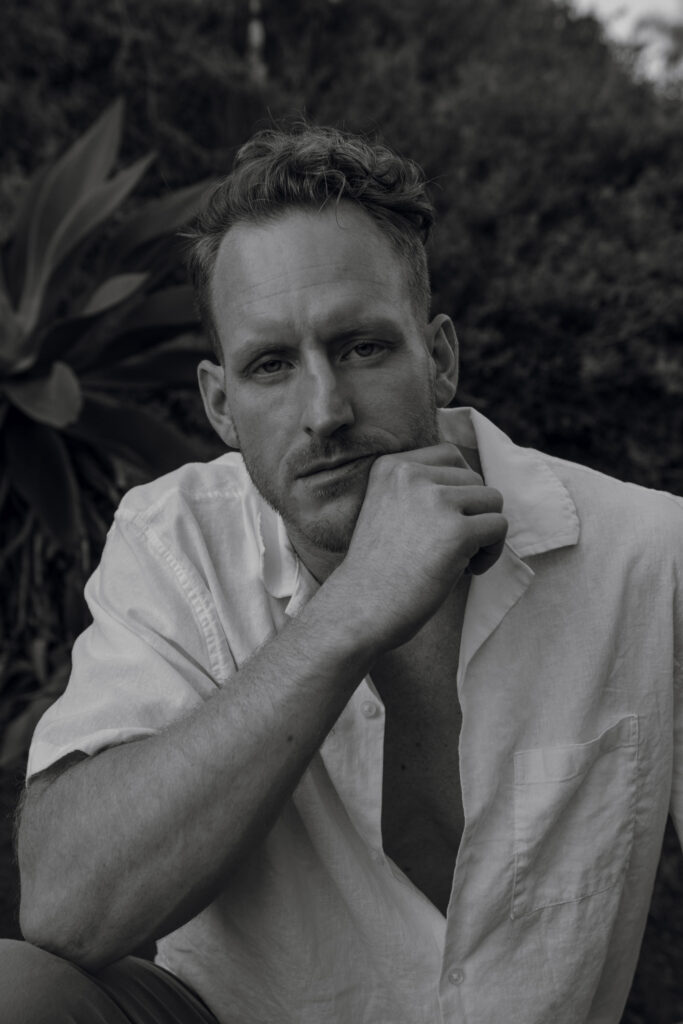
“The whole daddy situation just kind of happened.”
For Oberst, the fan response to his vertical drama roles has been both flattering and slightly surreal.
He understands that viewers have embraced him in a very specific kind of role, but he is quick to say that the persona audiences associate with him is not necessarily how he sees himself.
“The whole daddy situation just kind of happened,” he says with a laugh. “It wasn’t exactly something that I was going for. It’s funny. Also, not at all how I see myself, so it’s kind of wild.”
That disconnect may be part of what makes the performances work. Oberst is not simply playing himself with a costume change. He is often leaning into something far outside his own personality.
“I think also because it isn’t necessarily my normal personality, it’s kind of fun in a sense to jump into something that’s like, ‘I wouldn’t do this,’” he explains. “Somebody told me, ‘You always play the asshole,’ and I was like, ‘Yeah, you know what? I think you’re right.’”
Still, the work itself is not always as serious as the final product may appear. On set, especially in the vertical world where scenes are often intense, fast-moving, and melodramatic by design, laughter is part of the process.
“After they yell ‘cut,’ we’re just laughing like crazy,” he says. “Some of my lines are so ridiculous that as I say them, I’m laughing inside. And as soon as they yell ‘cut,’ I just bust out laughing.”
That humor has helped audiences see another side of him, particularly in The Maid Did It, a project many fans responded to because it allowed Oberst to play with comedy and timing rather than existing solely in the brooding romantic lead space.
“That was a really fun show,” he says. “We had so much fun on set, all of us, because we were all just hanging out.”
Fatherhood, family, and the roles that no longer fit the same way
While Oberst’s screen persona may be dominant, commanding, and often steamy, his real-life identity is grounded in family.
He is married and has two young daughters — one three years old and one nine months old at the time of the conversation — and fatherhood has changed not only his daily life, but also the way he thinks about his work.
His daughters, he jokes, are not particularly impressed by dominance.
“My three-year-old, anything that’s like, ‘Do this right now,’ is met with the most protest humanly possible,” he says. “But if I reverse psychology it, or if I’m just like, ‘Oh yeah, no worries, maybe you can do this,’ then she just goes and does it. It’s crazy.”
That tenderness and self-awareness are part of why Oberst is starting to look more closely at the roles he takes. He does not reject the vertical space. In fact, he speaks with clear gratitude about the opportunities it has given him. But he is also honest that, at this stage in his life, he is becoming more selective.
“I’ve done so many of those daddy roles,” he says. “I’m at a point now where over the last few months, I’m trying to get into other stuff.”
That does not mean he is opposed to romance, sensuality, or emotionally charged material. For Oberst, the distinction is whether that element serves a larger story.
“I don’t mind steaminess at all if it’s a small part,” he explains. “If it’s an action or a drama and there’s a little bit of steam, dude, that’s in everything. But it’s a totally different thing when that’s the focus.”
The actor’s current mindset is not one of regret. It is more of a recalibration.
“This career choice is so full of rejection,” he says. “There are so many closed doors that you kind of just got to walk through the open ones. I’m finally getting to a point now where I’m like, okay, maybe not every open door is meant to be walked through.”
Going full-time and learning which doors to walk through
Oberst made the leap into acting full-time two years ago, on June 1. Once he made that decision, his mindset was simple: work.
“Once I did that, I was like, well, whatever I get, that’s what I’m doing,” he says.
That willingness to say yes helped him build momentum in a difficult industry. The vertical drama space, in particular, gave him something many actors spend years chasing: consistent experience.
“We’re all so stoked to be working so much and getting this much experience,” he says. “In a time where movies, film, and TV have been a lot slower, I’ve been so stoked that this industry just kind of popped up.”
He sees vertical dramas not as a lesser form of entertainment, but as a legitimate training ground and a rapidly evolving medium. The pace is fast. The emotions are heightened. The production schedules can be intense. But for an actor, all of that becomes practice.
“I look at all the work as an acting gym,” he says. “You work, you get better, you try new things, you expand yourself, you experience new stuff. It becomes an experiment in what’s next. What else can I do to push myself?”
That hunger to keep evolving is what is pulling him toward other genres.
He would love to do horror. He would love to do action. He would love to do thrillers. He is especially drawn to characters with duality — the romantic figure who is not what he seems, the good guy with something darker underneath, the role that allows him to move between charm and danger.
“I auditioned for something where you think he’s the good guy and the romantic dude at the beginning, and then you find out he’s the serial killer later,” he says. “That sounds like so much fun. I want to do that so bad.”
The emotional residue of playing difficult characters
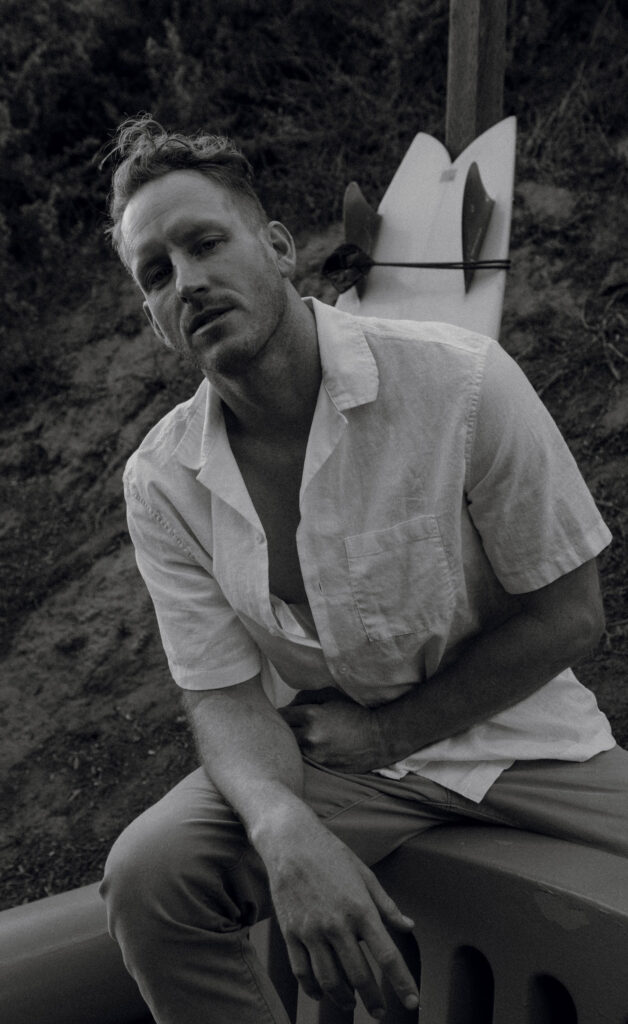
For all the fun Oberst finds in performance, he is also candid about the emotional cost of certain roles.
Because he did not come through a traditional conservatory path, he has developed his process through classes, on-set experience, and instinct. His approach is immersive. He tries to live as much of the character as possible while he is working.
That can be powerful on screen, but it can also linger.
“Sometimes being these people, I’ll forget that I’m wearing somebody else,” he says. “A project will wrap, and I’ll be feeling a certain way, and I’ll be like, ‘Oh yeah, I’m still wearing that character.’”
Oberst has become more conscious of the need to separate himself from the people he plays, especially when the characters are cruel, regretful, emotionally damaged, or morally compromised.
“I’m finding anchors to become myself again,” he says. “Sometimes you just kind of lose yourself a little bit. You pick up emotional baggage that isn’t yours.”
One role in particular stayed with him longer than he expected.
“I did a role in April that was pretty horrible,” he says. “The character himself was not a good person. I hated it. I would love to never do a role like that again.”
The production was demanding, with long hours and heavy emotional material. When it ended, Oberst had to reconnect with himself — not as a character, but as Aaron.
“I had to find who I am, what I like, what part of me is me, and what part of me is not any of these people that I’m playing,” he says. “That’s a whole other learning curve.”
For Oberst, acting is not just external transformation. It is an internal negotiation. The work asks him to feel deeply, but life asks him to come home whole.
Faith, kindness, and staying grounded
Oberst’s faith is another throughline in the conversation. It is not something he presents performatively, but it is clearly part of how he makes sense of his life, his career, and the choices in front of him.
That can seem surprising to some fans who primarily know him from steamier vertical drama roles, but Oberst does not see faith and artistry as mutually exclusive. He sees his career as a path filled with open and closed doors, discernment, and constant adjustment.
He also keeps a phrase on his Instagram that reflects the kind of person he wants to be: “Kindness is currency.”
“It is true,” he says. “Also, sometimes we’re all human. I wish I could be kinder. It’s a good reminder for myself.”
That reminder matters even more when he is playing harsh or arrogant characters.
“Since I do play these assholes quite often, that stuff can kind of bleed into normal life,” he says. “So I have to be very mindful of that.”
Oberst’s awareness is one of the most compelling things about him. He is not dismissive of the roles that helped build his audience, but he is also not blind to how they affect him. He is grateful, but not complacent. He is ambitious, but not careless. He wants success, but he also wants alignment.
The vertical drama boom, AI disruption, and what comes next
Like many actors working in the vertical space, Oberst has been watching the rise of AI-generated content with concern and curiosity.
He has seen the industry shift quickly. He has noticed work slowing down for some actors. He has watched platforms experiment with AI content, even as many fans continue to advocate for real performers.
“This year has been pretty busy,” he says. “I’ve been jumping from gig to gig, and the vertical space has been so kind to me. But over the last month or so, I’ve had a lot of people say, ‘Yeah, dude, it’s slowed down a lot for everybody.’”
Oberst describes AI as disruptive to the vertical ecosystem, particularly because the space expanded so rapidly.
“They pretty much doubled production this year, year over year,” he says. “Then all of a sudden there’s just a ton more work for all of us actors, which would be great.”
His hope is that audiences will ultimately make their preferences known through engagement.
“I’m hoping that the fan base and the clicks and the views and the numbers speak for themselves,” he says.
Still, Oberst is not entirely dismissive of AI’s potential. He can imagine a scenario where AI experimentation allows platforms to test different genres and story structures, which could eventually open doors for more live-action work outside the standard vertical soap formula.
“Most of us actors, the soap operas are great, the genre situation is totally fun, but we’d all love to be doing action or horror or thriller,” he says. “Maybe these apps are going to be able to take some more risks in different genres and trying different stuff.”
He also believes vertical storytelling itself is not going away. In fact, he has worked on projects shot both vertically and horizontally, and he sees that hybrid model as part of the future.
“The vertical medium, it’s on your phone,” he says. “I don’t think it’s going anywhere. I feel like that’s probably the future of a lot of filmmaking.”
At the same time, he has become more cautious about contracts and likeness rights. After seeing other actors talk about the issue, he began using an AI clause.
“I have an AI clause that I started using last year,” he says. “Before that, there’s a whole year’s worth of work where nobody was even thinking about AI.”
Community, collaboration, and the actors who keep showing up
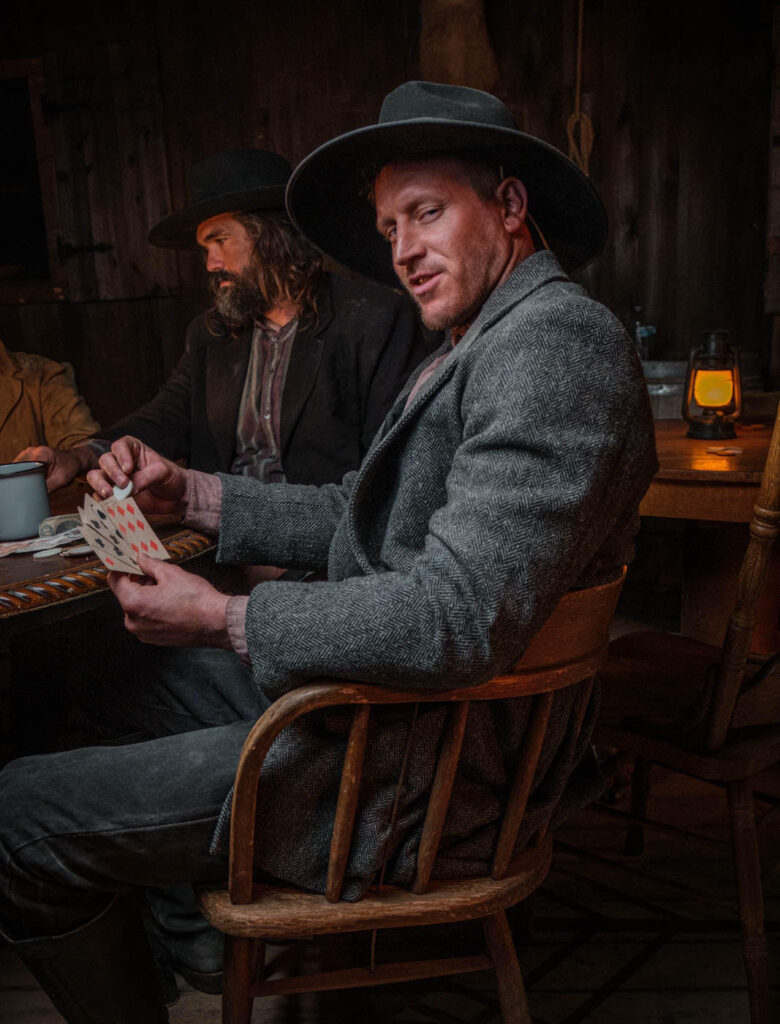
One of the defining qualities of the vertical drama world is how small and interconnected it is.
Oberst speaks warmly about many of his peers, including Tess Dinerstein, Sophie Jordan Collins, Autumn Noel, and Sarah Moliski. Many of these connections go beyond vertical sets; some began years earlier through commercials, smaller gigs, and the unpredictable overlap of the Los Angeles acting world.
Sarah Moliski, he says, is one of his favorite people.
“We met on one of my very first gigs in LA,” he says. “She’s one of the coolest, funniest, and most hardworking people that I’ve met in this industry.”
He describes her as someone constantly moving between acting, casting, ambassador work, and relationships with different apps and platforms.
“She’s working 24/7,” he says. “It’s wild. I don’t know how she does it.”
Tess Dinerstein also comes up with clear admiration. Oberst credits her with encouraging him to do this interview.
“Tess is great,” he says. “People reach out sometimes, and I’m like, is this something I actually want to do or not? Tess had great things to say.”
The community may be niche, but it is global. Oberst is aware that view counts can be enormous while daily life remains unchanged.
“You see view counts and you’re like, whoa,” he says. “But a lot of those views are not in the U.S. It’s global. I’m in LA, in a little two-bedroom duplex. Nobody — it’s not what it looks like. One hundred sixty million views? My life is the same.”
That perspective keeps him grounded. Visibility does not always equal financial security. A viral project does not eliminate uncertainty. An actor can be recognized by fans online and still be looking for the next job as soon as one project wraps.
“As soon as you wrap one of these shows, sometimes I’ll have another gig booked,” he says. “But it’s right back to unemployed.”
From physics to acting: “The answer is right under your nose.”
Before acting became his full-time path, Oberst studied physics.
He was drawn to the mysteries of quantum theory, particles, waves, dimensions, and the strange behavior of matter at the smallest levels. Even now, he lights up talking about it.
“I find physics very interesting, especially quantum and all the weird things,” he says. “On a quantum level, atoms do not behave like macro physics behaves.”
But while the subject fascinated him, the academic path began to feel wrong. During one semester, while deep into higher-level mathematics, he became depressed and unsure of what he was doing with his life.
“I was in the gym, praying, talking to myself, just like, ‘What the hell am I going to do with my life?’” he recalls. “I thought it was going to be this, and I don’t think it’s going to be this.”
He had already taken some theater courses because certain physics classes were unavailable, so acting was somewhere in his mind. Then came a moment he has never forgotten.
“I got the sense in that moment that the answer was right under my nose,” he says. “That was the phrase: ‘The answer is right under your nose.’”
He looked down.
He was doing push-ups on a medicine ball. The ball said “reactor,” but his hands were covering the “re” and the “or.”
The only visible word was “act.”
“I was like, ‘Oh, okay,’” he says. “I dropped out and started taking classes.”
It is the kind of story that sounds almost too cinematic to be real, but perhaps that is why it fits him. Oberst’s path has not been linear. It has been a series of signals, risks, open doors, closed doors, and choices made before the outcome was guaranteed.
Accents, bedtime stories, and the unexpected training of fatherhood
Oberst is still actively working on his craft. At the time of the conversation, he was taking accent coaching classes, including work on a British accent.
“One thing about having kids is that because I read to them so often, I get to practice so many different voices,” he says.
His three-year-old daughter, he shares proudly, already reads — something that amazes him because reading was difficult for him as a child.
“When I was 12, they were making me read out loud in class, which was so embarrassing because I was so bad at it,” he says. “I was stumbling through words, and people next to me were like, ‘Dude, how old are you?’”
Now, as a father, he gets to turn reading into play. Voices, accents, characters — all of it becomes part of bedtime and part of training.
“It’s fun because I get to practice all the different weird voices,” he says.
That childlike joy is central to how Oberst views acting. He still sees performance as play, as pretending, as the chance to experience memories that are not technically real but feel real in the body.
He remembers working background on Babylon, where he was part of a large battle sequence with choreography, horses, weapons, and bodies moving everywhere.
“I had a sword,” he says. “This guy had a spear, and we were doing this fight scene. Horses would go past on either side. Dudes would be running through. In my mind, yeah, there are cameras everywhere, but I have memories of a medieval battle that are so visceral.”
For Oberst, that is the magic.
“That in itself is just so much fun,” he says. “It’s the whole reason why I do this. It’s the child in me that just wants to play pretend.”
The films that shaped him
When asked about independent films he loves, Oberst admits that he does not always mentally categorize movies by budget or distribution. He thinks of them simply as movies that moved him.
Still, a few titles come to mind.
He names Dallas Buyers Club, noting Matthew McConaughey’s complete transformation. He brings up The Boondock Saints, one of his favorite indies, and Blue Ruin, a smaller revenge thriller he admires. Fight Club has been a favorite for years. He also mentions Running with Scissors and Before the Devil Knows You’re Dead, while praising the emotional force of Amazon’s Undone.
“It’s live action, but they overlaid the live action with animation,” he says of Undone. “It becomes this really psychedelic trip, but some of the best emotional scenes that I’ve ever seen in anything were from that show.”
These references say a lot about Oberst’s taste. He is drawn to transformation, moral ambiguity, emotional intensity, and stories that push form. He appreciates actors who disappear into roles, and he is clearly hungry for the kind of material that allows him to do the same.
The next version of Aaron Oberst
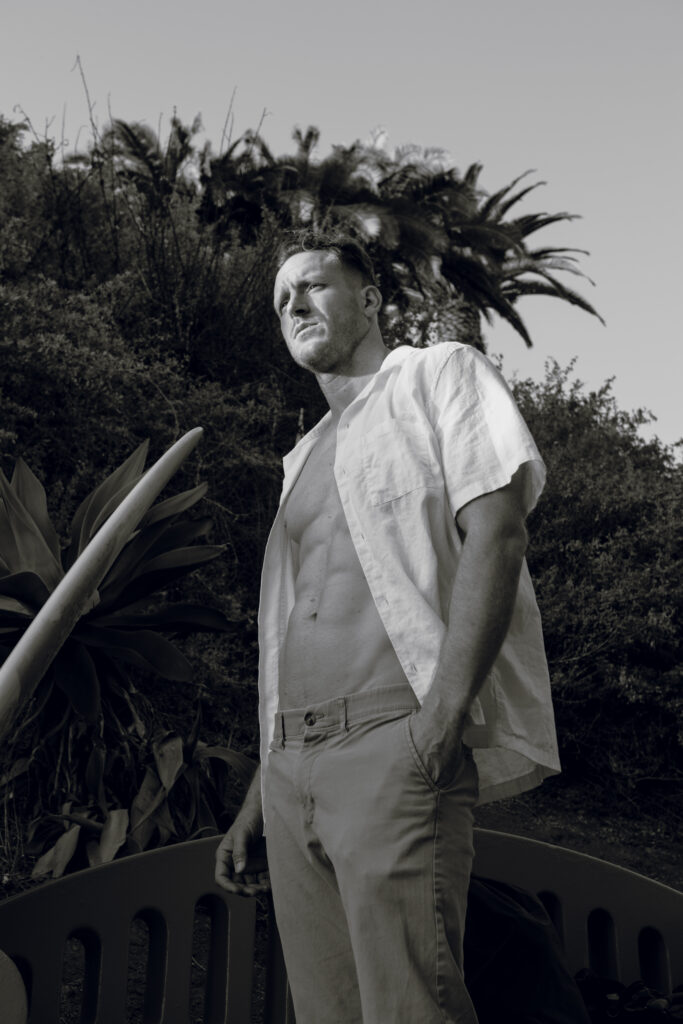
Aaron Oberst is in a transitional moment — not leaving behind the vertical space, but expanding beyond the version of himself that space has most often asked him to play.
He is grateful for the work. He is aware of the fans. He is thankful for the experience. But he is also listening to his life, his faith, his family, and his instincts.
He wants the next thing to have weight.
“I would like to do something that’s meaty and substantial,” he says.
That could mean horror. It could mean thriller. It could mean action. It could mean comedy. It could mean a character who begins as one thing and becomes another. What seems clear is that Oberst is ready for roles that challenge him differently — roles that let him use the range fans have only begun to see.
The vertical drama world may have introduced him to a larger audience, but it does not define the limits of what he can do.
For Oberst, every role has been practice. Every set has been a lesson. Every open door has taught him something — even the ones he may not walk through again.
And now, with more discernment, more experience, and a clearer sense of self, he is looking toward what comes next.
“I’m stoked where I’m at,” he says. “Very, very thankful for all this, very thankful for verticals in general. But yeah — I want to move into other stuff.”
For an actor who once looked down and saw the word “act” waiting between his hands, that next chapter feels less like a pivot and more like a continuation.
Aaron Oberst is still listening.
And the work, it seems, is still calling.
Connect with Aaron on Instagram
Related Interviews:
Tess Dinerstein on Vertical Films, Chemistry On-Screen, and Speaking Up for Herself
A Candid Encounter: Haley Lohrli On the Whirlwind of Micro-Dramas, Personal Reinvention, and the Art of Authenticity
Kasey Esser on Vertical Storytelling, Micro-Dramas, and Acting for the Phone Screen
An Intimate Conversation with Autumn Noel: Craft, Creativity, and the Future of Vertical Storytelling
Eric Taylor Guilmette on Creative Risk, Vertical Storytelling, & the Power of Staying Curious
Felix Merback Isn’t Interested in Playing It Safe
Shayne Davis on Reinvention, Vertical Storytelling, and the Disciple of Becoming
Sophia Delucchi Isn’t Just Acting – She’s Living Every Moment
Gabrielle Faith Brown Isn’t Playing the Game – She’s Rewriting It
Finding Faith, Identity, and Boundaries in a Rapid-Fire Industry: An Interview with Sophie Jordan Collins